
-
Redefining diuretics use in hypertension: why select a thiazide-like diuretic?
Redefining diuretics use in hypertension: why select a thiazide-like diuretic ? Michel Burnier, George Bakris, and Bryan Williams
-
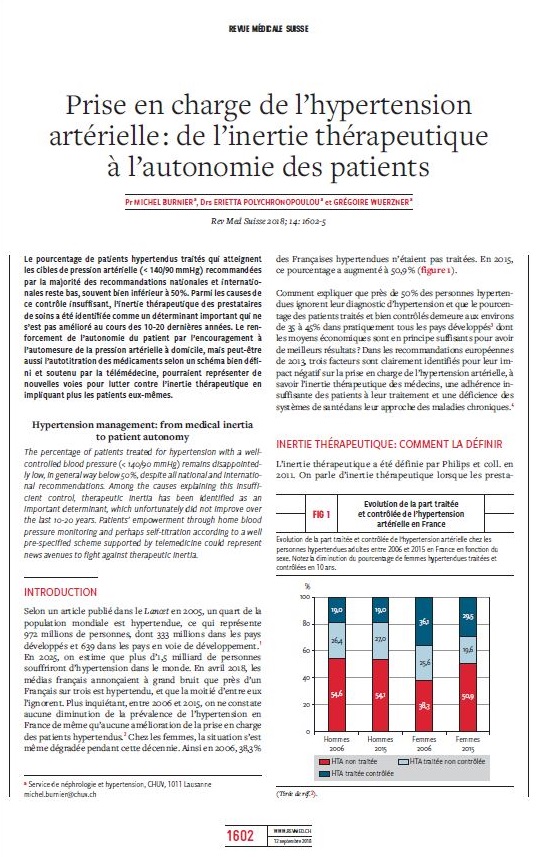
Management of Arterial Hypertension: From Therapeutic Inertia to Patient Empowerment
Prof. MICHEL BURNIER, Drs. ERIETTA POLYCHRONOPOULOU and GRÉGOIRE WUERZNER
-

New Blood Pressure Targets: Much Ado About Nothing?
How can we accept the lowering of blood pressure targets in daily practice when more than half of treated hypertensive patients have blood pressure values above the "former" targets? The publication of new guidelines concerning the diagnosis of hypertension and the target blood pressure levels to be achieved routinely plunges us back into an almost Lelouch-like question: What was it all for?
-
Optimizing hypertension management in renal transplantation: a call to action
Cardiovascular events represent a major cause of death in renal transplant patients [1,2]. Renal transplant recipients also constitute a population at very high risk for progressive graft loss and renal events. Although immunological risk factors play an important role in renal survival, it is less recognized that hypertension is probably the major nonimmunological risk factor for graft loss [2]. Accurate diagnosis of hypertension and adequate control of blood pressure (BP) is considered as a fundamental goal in the management of renal transplant patients to lower their cardiovascular and renal risk. However, diagnosis, treatment and monitoring of hypertension remain suboptimal in most renal transplant patients [3]. This editorial is a call for action aiming at improving hypertension control in the transplant population.


Recent articles
- Poor Physician Adherence to Clinical Guidelines in Hypertension—Time for Physicians to Face Clinical Inertia

- Dietary sodium intake does not alter renal potassium handlingand blood pressure in healthy young males

- Management of hypertensive disorders inpregnancy: a Position Statement of the EuropeanSociety of Hypertension Working Group‘Hypertension in Women’

- Gout and hyperuricaemia: modifiable cardiovascular risk factors?
- Women’s health, cardiovascular risk and hypertension: the perspective still needs to improve